
From Macchiatos to Malice
Catch My Drift? Part 1
Part 1 of 2 on political language
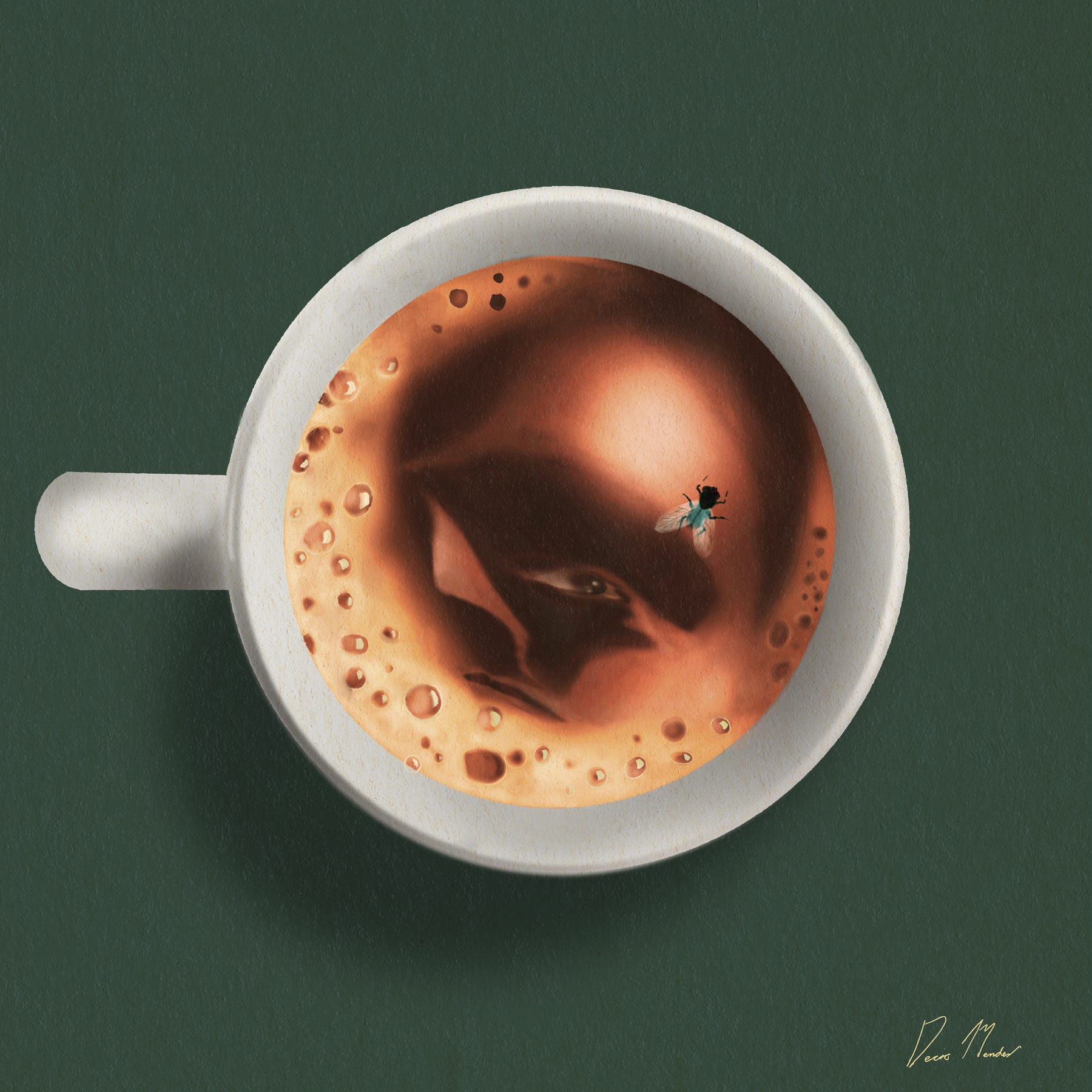
If in the early 2000s you found yourself in Arcata, California, when collegiate dreads bounced along to hacky sacks and drum circles made every hangover feel like your first—I may have poured your coffee at Sacred Grounds.
Our custom La San Marco espresso machine was built to the mid-1940s spring-lever specs that popularized espresso across Europe after Mussolini’s fall. Getting the most out of this Italian beauty required a skilled barista, preferably one who had not spent the previous night indulging in college town shenanigans. This was never a guarantee. The grind had to be precisely measured, leveled, tamped, and loaded. No circuit boards, buttons, or digital displays. To pull a shot, baristas muscled down a nearly foot-long lever and counted the seconds it took to rise, ensuring a creamy, golden crema. If done correctly, the finest, award-winning espresso on the Lost Coast was served. If not, uneven pressure could cause the portafilter to fly across the room as the machine spat molten espresso like a demonic llama.
The cafe’s menu was traditional. A macchiato was exactly that—a shot of espresso topped with a “mark” of foam. The Italian word contains the literal meaning. For years, people loved our macchiatos. Then, nearly overnight, it changed: ”This is NOT a macchiato!” “Why is it so small?” “Do you even know what a macchiato is?!” Customers were peeved. The staff was bewildered. Eventually, we figured it out — a Starbucks had opened nearby.
During the 1990s, Starbucks spread like 16th-century Catholicism. Outside major cities, it was the only espresso in town. In some areas, it still is. During Starbucks’ rapid expansion, the Caramel Macchiato was its most popular drink. Created in fall 1996 to celebrate Starbucks’ 25th anniversary, the Caramel Macchiato is a gussied-up vanilla latte made of espresso, steamed milk, vanilla syrup, whipped cream, and a caramel drizzle. It comes in sizes up to a 20-ounce “venti.” The sweet drink was a hit for the Seattle-based chain. So much so that, through sheer marketing power, it stripped the word macchiato of its meaning and replaced it with a brand identity.
Like the Big Mac and Whopper, the Caramel Macchiato became a household name. Some independent cafes resisted. To stay in business, many relented and adopted the new terminology. Eventually, those who knew what a macchiato was became the ones who didn’t know what they were talking about.
Words change meaning. Semantics drift, slang comes and goes, and misunderstandings set new linguistic rules. Social media, memes, and hashtags quickly spread new language from online to off. Sometimes, meaning changes naturally; other times, it’s deliberately modified by marketing and public figures. Words can get laundered through propaganda and punditry. They can go viral only to be weaponized or quickly disregarded.
In some cases, who is saying what and to whom can be more meaningful than the words themselves. Calling a presidential candidate “fascist” or “Hitler” may be hyperbolic and lead to losing your job, or it may be so innocuous that you’re chosen to be the candidate’s running mate. A paradox of fascism is that the more prevalent it is in a society, the less “fascism” means.
I’m not a linguist. If you are, aspects of this series may be familiar. But I hope it’s helpful for those attempting to articulate the political challenges of our time or simply to communicate clearly. In the decade after World War II, authors such as Hannah Arendt, Victor Klemperer, George Orwell, Kenneth Burke, Irving Howe, and James Baldwin, among many others, examined the role of language in politics. This isn’t new territory. Though the internet and social media have ushered in new dynamics and challenges. At the very least, there are patterns to be recognized. Finding the right language for the moment can help us get through it.
SEMANTIC DRIFT
Trends come and go. Look at the width of your pants, lapels, and neckties. If they aren’t sufficiently wide or narrow, the zeitgeist will sideline you. Words also come in and out of fashion. Your great-grandmother didn’t use “gay” the same way you do, nor did your uncle in the 90s. Saying, “My moots are blowing up my phone with that viral TikTok — it’s fire!” would surely have been confusing a couple of decades ago and may still be for elders today. How many men over 35 know what “Brat” Girl Summer is?
The evolution of a word’s meaning over time is called semantic drift. It occurs in several ways:
If one isn’t aware of a word’s latest use, they’re ripe to misunderstand it. Clarity is lost. Abbott and Costello hilarity ensues. And if a reference is outdated…
SLANG
From cool to salty, popular slang in America often originates in African American Vernacular English (AAVE). The LGBTQ+ community is also a key source. Bear, Otter, and Silver Fox aren’t merely forest creatures. Ball culture, through Paris Is Burning and later RuPaul’s Drag Race, introduced terms now commonly used by Gen Z: slay (to perform well), read (to deliver sharp, witty, and often playful insults), and tea (gossip), among others. In-group slang fosters strong bonds and a shared identity. Some slang enters the broader vernacular, usually through the arts and media. This can be positive, encouraging acceptance and better understanding of minority communities. But increased visibility also increases the risk of slang becoming a slur.
In 1938, Lead Belly recorded his song “Scottsboro Boys.” It tells the true story of nine black teens falsely accused in 1931 of raping two white women in Alabama. Narrowly escaping lynching, and despite flimsy evidence and later retractions by the accusers, all but the youngest, 14-year-old Roy Wright, were sentenced to death. After seven years of appeals and court battles, including a Supreme Court hearing, the four youngest had their charges dropped. The five oldest received sentences ranging from 75 years to life. Despite exoneration, they served sentences ranging from six to nineteen years. At the end of the recording, Lead Belly stops singing and speaks:
“I advise everybody, be a little careful when they go along through there [Alabama] — best stay woke, keep their eyes open.”
For Lead Belly, “stay woke” was a literal instruction for survival in the Jim Crow South.
In 1962, novelist William Melvin Kelly wrote an essay for the New York Times about the appropriation of black jazz slang called “If You’re Woke You Dig It,” writing:
“A few Negroes guard the idiom (AAVE) so fervently they will consciously invent a new term as soon as they hear the existing one coming from a white’s lips.”
“The Negro knows that part of his code is being broken. When, once again, I make a run, I will probably find that ‘to vine’ no longer means to ‘dress magnificently’, but rather to dress badly, and ‘the man’ is no longer the ‘po- lice.’ It will not be long before they are blowing out of an altogether different linguistic bag.”
In 1971, “stay woke” took on a more political meaning in Barry Beckham’s play Garvey Lives! about Marcus Garvey. (who in 1923 wrote, “Wake up, Ethiopia! Wake up, Africa!”). With the line:
”I been sleeping all my life. And now that Mr. Garvey done woke me up, I’m gon’ stay woke. And I’m gon help him wake up other black folk.”
Erykah Badu may have sparked the latest use of the term “woke” with her song “Master Teacher” (I Stay Woke). In 2012, after the murder of Trayvon Martin, #staywoke began appearing on Black Twitter. When the Russian feminist rock group Pussy Riot was imprisoned for “hooliganism motivated by religious hatred” for their song “Punk Prayer,” which criticized Putin and the Orthodox Church’s support of him, Badu posted in solidarity using the hashtag #staywoke.
New slang spreads quickly, especially online. To bypass algorithmic censorship, it can take the form of “algospeak.” “Gun” becomes “pew pew,” “sex” becomes “segg.” In such cases, it’s a form of resistance. At other times, when a trending term goes viral, people leverage algorithms to amplify their reach, driving the term’s adoption online and offline. Influencer Adam Aleksic, aka @etymologynerd, argues in his NY Times bestselling book Algospeak that social media not only speeds up the creation of new language but also appears to be the primary source of new words entering our daily speech.
During the Ferguson protests in 2014, Black Lives Matter used #staywoke to promote awareness regarding police violence against their community. In 2016, social media feeds shifted from a chronological to an algorithmic order. Around the same time, a wave of terminology emerged from the political left: gaslighting, Latinx, cisgender (Cis), trigger warning, cultural appropriation, they/them pronouns, etc. BLM allies outside of the black community began applying woke to all forms of social inequality. #staywoke became #woke and #wokeAF. “Woke” became synonymous with progressive politics and social justice. Interestingly, this broader use of woke was embraced by many on the left who were the first to call out others for “cultural appropriation” and saying “All Lives Matter.”
In the 20th century, the dominant marketing idea was that sex sells. By the 21st century, fear, anger, and tribalism had proven more effective at grabbing people’s attention. As a segment of the left began policing language, often illiberally, the right aimed to “own the libs” with its own rage-driven vocabulary: snowflake, social justice warriors, red-pilled, virtue signaling, cancel culture, based, NPC, and Woke. Anything from the left that the right didn’t like, whether it was a fair critique or not, was labeled “woke.” While perhaps not as broadly damning, people on the left began pointing out the hypocrisy when those on the right act like “snowflakes” or engage in cancel culture. Eventually, the left and the right had their own fighting words. And if one is seeking engagement online, the algorithms made it clear they’d better choose theirs.
As linguist John McWhorter wrote in the New York Times, “Woke” wasn’t a new idea. The word replaced “politically correct.” Eventually, politically correct became the pejorative “PC,” and it fell out of fashion. "Woke" carries a negative connotation today. When people on the left use it to refer to themselves, it’s often a reclamation. I can’t predict if “woke” will ever lose the pejorative connotation. It seems unlikely. This cycle is what linguist Steven Pinker calls the Euphemism Treadmill. The ideas don’t go away. But their branding falls out of favor until it reemerges, updated to fit the times.
Politicians perpetually burn calories on the euphemism treadmill, painting language with their partisan brushes: The Estate Tax becomes the Death Tax; Homeless becomes houseless; undocumented rather than illegal alien; torture turns into enhanced interrogation; killing is officer-involved shooting, friendly fire, or collateral damage; prisons are camps or detention centers; displacement is resettlement; lies become alternative facts.
It’s one thing when semantic drift ruins your coffee order; it’s another when it undermines reality and divides us. In part 2, we’ll look at academic and political terminology to see how complex and technical words are created, used to persuade, and diluted. What happens to democracy when we run out of shared words? Can our understanding of the process help us regain our shared language and communicate the struggles of our time?


